Thursday, December 4, 2014

10 Questions & Answers: Final Reflections

Reflection Questions to answer in Sketchbook
Please answer questions in your sketchbook due the last class, M 12/1/2014
Reflection:


1. What do you want to do in life with your art?
A. I want to become healthy & happy with it, even inwards and spiritually. But on the objective side, I want to live life with my art by painting, illustrating, modeling, designing, and directing both digitally and traditionally, primarily for video game companies, and perhaps then films, novels, shows, comics, shorts, animations, etc.

2. What have you learned in this class about being a working artist?
I learned to not be afraid, just do it. Explore, be more open-minded, and never give up as you gain knowledge of what and who the artists and artworks are.

3. Where will you be in 5 years?
Most likely in my early stages of working as a visual artist (preference is 2D illustrations and paintings!) for video games and/or animations. (primarily video games though!)


4. Have you considered an internship during your college experience? If so, where would your ideal location be to have an internship? Can you start looking now?
Yes, I have considered and I will need to get to it soon as part of completing the BFA of Illustration program. My ideal location is either NC (Charlotte for example), AZ, Australia, United Kingdom, or Finland.

5. What is most important to you in life?
Happiness, in any and all the ways, particularly upon inner, long-term peace.

6. How will you balance career and family if that is what you want?
I do not plan to have a biological nor actual family of my own; my best friends could very well be something I can call a family in my perspective. With my current actual family, I can contact them once a month (as an example interval) via electronic device and meet them once a year (again, only an example) on holidays during the ideal years and golden-age of my current life span. To balance it, that's how it can be done upon communication, and for balance via action/work, I'll work a lot and make sure to stay realistic to make room for other necessities to take care of in the hours of each day.

7. When you graduate, art-making can be lonely and isolating working in the studio. How will you enter an artistic community once you leave art school?
The way I can enter the artistic community can very well be considered already done; I already network with various artists and people of similar interests in personal sites that I go to. Second, I don't mind the isolation; I do not do well in socializing anyway, so I'm at peace on that part when I'm not confronted with such stressful conflicts. I'll get to meet more new people including artists of many types in many communities both offline and online, over time.

8. Should art be made for an audience or for ourselves?
It should be for both, but to my aims, I want it to be for myself (ourselves), but open to be discovered in a natural pace and reasonable exposure by others. I concentrate everything that affects myself even directly; it's important to stay focused anyway.

9. Can art change the way people think?
Yes it can, but only to a considerable and believable extent. It cannot change them 100.0000000%, for that would be complete manipulation. They still have the spirit, as a life form individual, to think otherwise, let alone ignore my works, and that's okay.

10. What is your responsibility as an artist?

My responsibility as an artist is to not only hone my skills to the utmost possible surpassing points of a human being's capabilities, but also to add content and context to what truly matters in the form of artworks to anyone.

~This is Ryan Cook, and thank you for participating in this blog. //[[END TERM FILE]]

...

Late Log: Guest Speaker (Phorographer, Carlos)

http://www.carloslopez.photography/

On Thursday, November 20, 2014 --

--Carlos was the guest artist to speak to us as a class. The speaker is a photographer, and her advice that I learned was to preserve your art, no matter how good it is or what it is, including your oldest art. Learn from it, your mistakes, and even make best use of something for it. Photography is great, and it helps the art types to expand upon, let alone techniques and technology. That already said, I believe photography is something that I'd love to both hone my skills on and be happy enjoying on doing it as a hobby.

I was drawing for one of my artworks for my final art projects from another class, but the speech the guest made was quite valuable, including the demonstration of the images shown. They were intriguing and varied.

Finalized Curatorial Statement Update (Edit #2)

Data
Name: Ryan Cook
Exhibition Name: “Anthropomorphic Equilibrium”
Type: Gallery of arts from visual artists
Date: December 2014
Theme The central theme that I decided would be Symbiosis: Human Environment (but not limited to only people and nature).

Anthropy
Humans need to have fantasies to be human.”
Humankind cannot gain something without giving something in return in equal value.”

3 Artists (2 from ART 21 / Textbook, 1 of your own choosing)
ART 21: Jeff Koons (from ART 21)
TEXTBOOK: (CHANGED CHOICE)--> Mariko Mori (born 1967, Tokyo Japan)
CUSTOM: Yoshitaka Amano (custom choice)

Curatorial Statement
The exhibition of Anthropomorphic Equilibrium is the place for works of art that invokes the general theme of human environment made by selected few artists of the host's choice. In the gallery, the mediums of art are diverse but centralize under the involvement of natural environments and people (including creatures with human characteristics). In the works, both realistic and low-fantasy subject matters are involved. The works are each and every different in form and technique process, but the underlying theme is approximately the same. The anthropological focus of human kind is ever present here, where areas made by the environments and the people involved play a vital role. It's important to realize the key to survival, appreciation, and immersion upon complex reasons that interactive life forms make, and that's mainly what the exhibition's motive is for.Mariko Mori (born 1967, Tokyo Japan) is the designer, stylist, director, and star of her photos and videos. Her works convey the themes of transforming herself into an idealized cybernetic being,then creates comparable environments from it. It's all about the human desire for perfection, and on an aesthetically visual standpoint, it's like modern symbiosis for the future; harmony of quality. Her space age settings are to incarnate heavenly flawlessness.

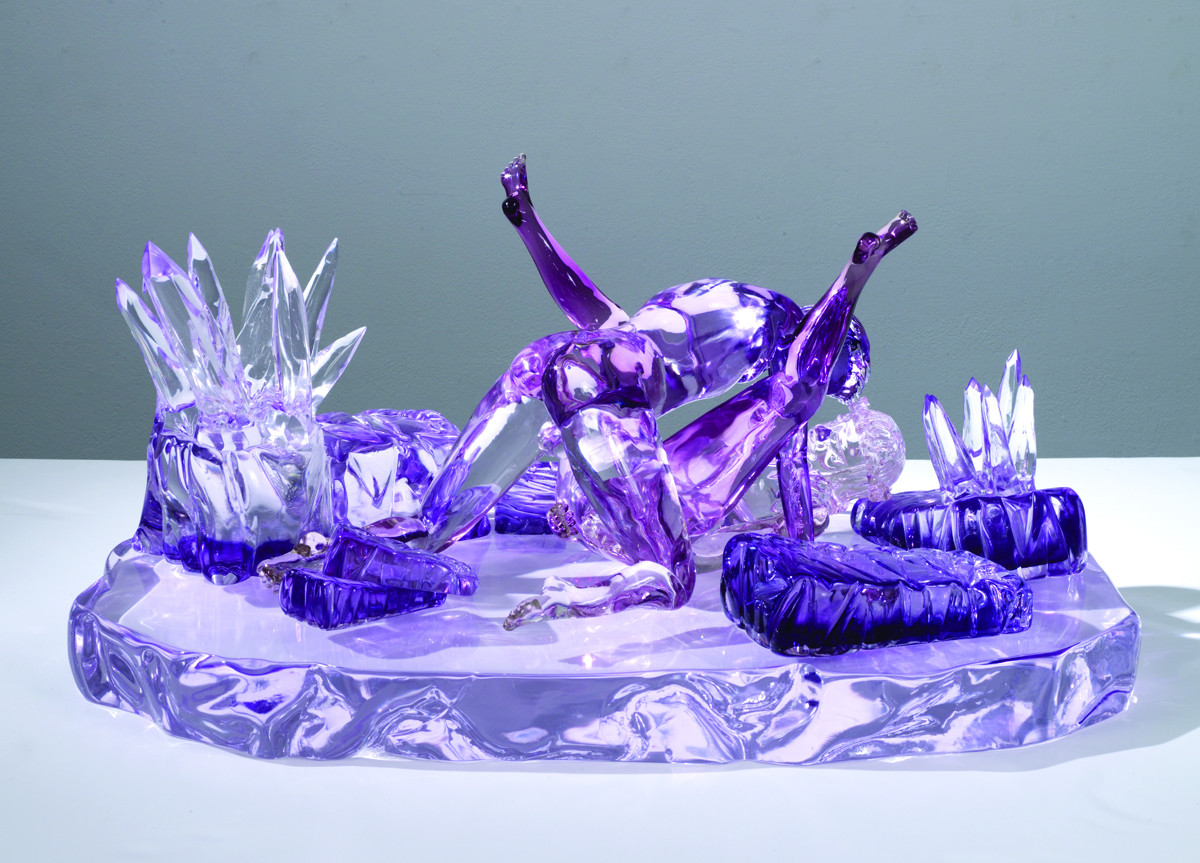
Jeffery “Jeff” Koons (born January 21, 1955, York, PA ) is a varied artist in both the 2D and 3D formations of his creations. The variety is high, from working in anthropomorphic materials of balloons, kitsch scraps, and technological parts, to paintings, 2D collages turned into formulated figures, and colorful 3D models. The use of allegorical display of animals, humans, and anthropomorphic creatures is taken to an iconic content made from what was once unimportant parts of materials into something profound and subliminally phenomenal. The creative attitude of using colors, psychological directions into intense shifts and drastic sizes, and wholeheartedly accepting determination to use anything and everything are all prevalent here.
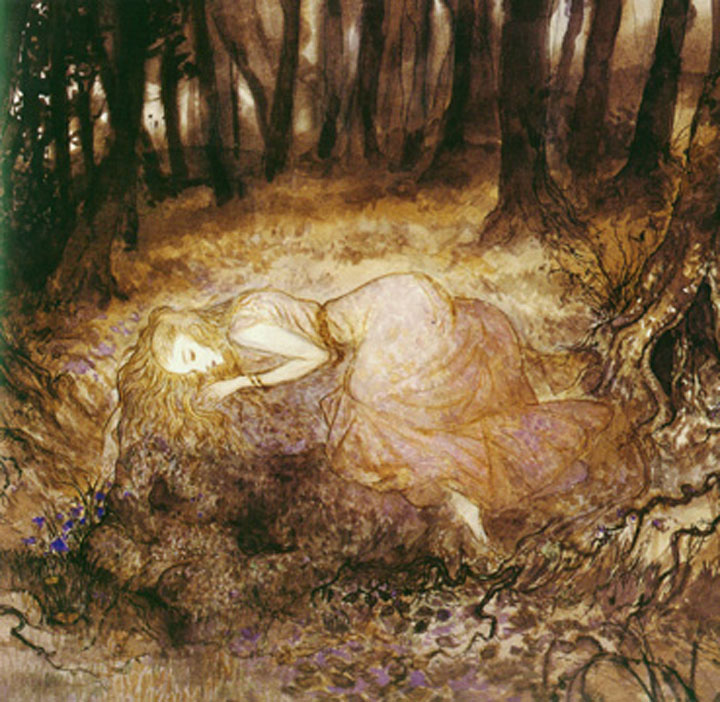
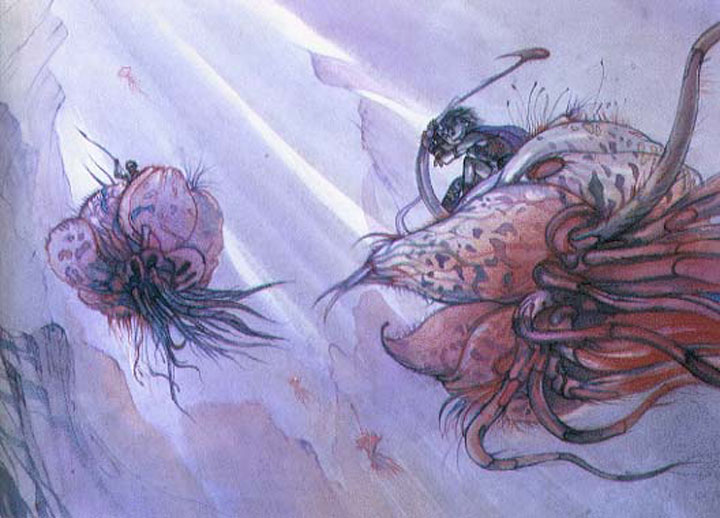
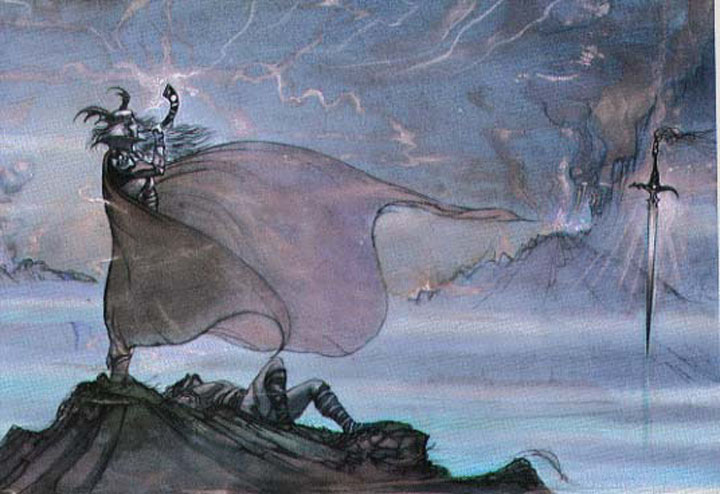
Yoshitaka Amano (born July 28, 1952, Shizuoka City Perfecture, Japan) is a Japanese artist, character designer, illustrator, and a theatre and film scenic designer and costume designer. Using complex but elegant techniques with watercolor, his visual works are of wisp and wonder. Most of his works rely on dream-like coloring, peculiar fantasy environments, and creative scenarios among character designs and still-picture interactions.

With all the artist's works in place, the significant factor of human nature and its environment to be linked by interaction and acts of nature are ever-present in both entertainment and the real world itself. More importantly, it helps to get a clear understanding even in an artistic, creative, and enjoyable sense in order to appreciate and accept the very true messages of reality even in films, shows, games, and books. Enjoy your observation to the works, as everything is bounded, and everyone is connected.

http://www.pbs.org/art21/artists/jeff-koons
http://amano-artwork.tumblr.com/

Images of artworks from each artist (visual art examples)

Works from Mariko Mori below


Works from Jeff Koons


Works from Yoshitaka Amano

Wednesday, December 3, 2014

(PROGRESSIVE PLACEHOLDER / STATEMENT UPDATE): Curatorial Change

I've been making concerning changes to my curatorial statement to make it less vague & less cliche (NOTE: This change is still NOT complete, hence placeholder. This will be updated again)
---------------------------------------------------------------------------------------------------------------------
Data
Name: Ryan Cook
Exhibition Name: “Anthropomorphic Equilibrium”
Type: Gallery of arts from visual artists
Date: December 2014

Theme
The central theme that I decided would be Symbiosis: Human Environment (but not limited to only people and nature).

Anthropy

Humans need to have fantasies to be human.”
Humankind cannot gain something without giving something in return in equal value.”

3 Artists (2 from ART 21 / Textbook, 1 of your own choosing)
ART 21: Sally Mann (from ART 21)
TEXTBOOK: (CHANGED CHOICE)--> Jeff Koons
CUSTOM: Yoshitaka Amano (custom choice)

Curatorial Statement
The exhibition of Anthropomorphic Equilibrium is the place for works of art that invokes the general theme of human environment made by selected few artists of the host's choice. In the gallery, the mediums of art are diverse but centralize under the involvement of natural environments and people (including creatures with human characteristics). In the works, both realistic and low-fantasy subject matters are involved. The works are each and every different in form and technique process, but the underlying theme is approximately the same. The anthropological focus of human kind is ever present here, where areas made by the environments and the people involved play a vital role. It's important to realize the key to survival, appreciation, and immersion upon complex reasons that interactive life forms make, and that's mainly what the exhibition's motive is for.

Sally Mann (born May 1, 1951 (age 63)
A photographer that manages with arduous but authentic techniques about mostly colorless portraits of people & the outdoor setting. Children, outdoor natures, & old houses are involved. Her use of lighting and coloring choices represent a historical and haunting aura that justifies the notion of life and death.
Jeffery “Jeff” Koons (born January 21, 1955 ) is a varied artist in both the 2D and 3D formations of his creations. The variety is high, from working in anthropomorphic materials of balloons, kitsch scraps, and technological parts, to paintings, 2D collages turned into formulated figures, and colorful 3D models. The use of allegorical display of animals, humans, and anthropomorphic creatures is taken to an iconic content made from what was once unimportant parts of materials into something profound and subliminally phenomenal. The creative attitude of using colors, psychological directions into intense shifts and drastic sizes, and wholeheartedly accepting determination to use anything and everything are all prevalent here.

Yoshitaka Amano (born in Shizuoka City, Japan on July 28, 1952 ) is a Japanese painter on both original (general) and for video game artworks. Using complex but elegant techniques with watercolor, his visual works are of wisp and wonder. Most of his works rely on dream-like coloring, peculiar fantasy environments, and creative scenarios among character designs and still-picture interactions.

With all the artist's works in place, the significant factor of human nature and its environment to be linked by interaction and acts of nature are ever-present in both entertainment and the real world itself. More importantly, it helps to get a clear understanding even in an artistic, creative, and enjoyable sense in order to appreciate and accept the very true messages of reality even in films, shows, games, and books. Enjoy your observation to the works, as everything is bounded, and everyone is connected.
http://www.pbs.org/art21/artists/sally-mann
http://www.pbs.org/art21/artists/jeff-koons
http://amano-artwork.tumblr.com/


Images of artworks from each artist (visual art examples)

A work from Sally Mann

Works from Jeff Koons


Works from Yoshitaka Amano

Monday, December 1, 2014

Exhibition Curatorial Statement and Decided Information

Data
Name: Ryan Cook
Exhibition Name: “Anthropomorphic Equilibrium”
Type: Gallery of arts from visual artists
Date: December 2014

Theme
The central theme that I decided would be Human Environment (but not limited to only people and nature).

Anthropy

Humans need to have fantasies to be human.”
Humankind cannot gain something without giving something in return in equal value.”

3 Artists (2 from ART 21 / Textbook, 1 of your own choosing)
Sally Mann (from ART 21)
Mark Dion (also available in ART 21)
Yoshitaka Amano (custom choice)

Curatorial Statement
The exhibition of Anthropomorphic Equilibrium is the place for works of art that invokes the general theme of human environment made by selected few artists of the host's choice. In the gallery, the mediums of art are diverse but centralize under the involvement of natural environments and people (including creatures with human characteristics). In the works, both realistic and low-fantasy subject matters are involved. The works are each and every different in form and technique process, but the underlying theme is approximately the same. The anthropological focus of human kind is ever present here, where areas made by the environments and the people involved play a vital role. It's important to realize the key to survival, appreciation, and immersion upon complex reasons that interactive life forms make, and that's mainly what the exhibition's motive is for.

Sally Mann is a photographer that manages with arduous but authentic techniques about mostly colorless portraits of people and the outdoor setting. Her use of lighting and coloring choices represent a historical and haunting aura that justifies the notion of life and death. Mark Dion loosely combines science and art as one in an intelligent formation focusing on the dominant ideologies about the very nature of humanity, history, knowledge, and the natural world. His works are physical installments and made objects that represent those sub-themes, which are artifact-like. Yoshitaka Amano is a Japanese painter on both original (general) and for video game artworks. Using complex but elegant techniques with watercolor, his visual works are of wisp and wonder. Most of his works rely on dream-like coloring, peculiar fantasy environments, and creative scenarios among character designs and still-picture interactions.


With all the artist's works in place, the significant factor of human nature and its environment to be linked by interaction and acts of nature are ever-present in both entertainment and the real world itself. More importantly, it helps to get a clear understanding even in an artistic, creative, and enjoyable sense in order to appreciate and accept the very true messages of reality even in films, shows, games, and books. Enjoy your observation to the works, as everything is bounded, and everyone is connected.

LINKS OF THEIR WORKS:
http://www.pbs.org/art21/artists/sally-mann
http://www.pbs.org/art21/artists/mark-dion
http://amano-artwork.tumblr.com/


Images of artworks from each artist (visual art examples)

A work from Sally Mann

A work from Mark Dion


A work from Yoshitaka Amano